Overview
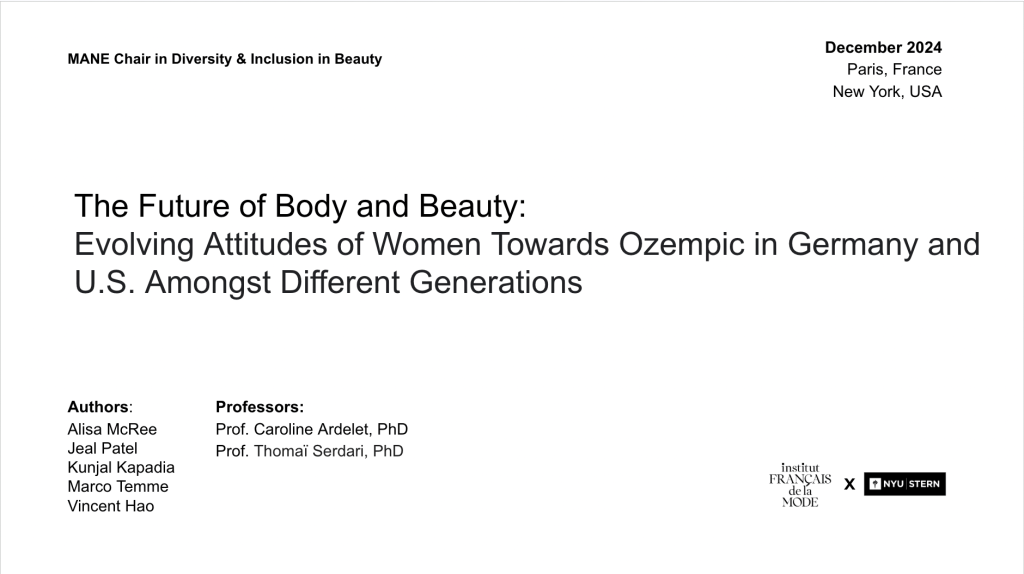
Partnered with MANE’s Chair in Diversity & Inclusion in Beauty to conduct a cross-market research study exploring how emerging weight-loss medications are reshaping perceptions of beauty, body image, and status across generations in the U.S. and Germany. The project aimed to understand the intersection of medical innovation, cultural values, and evolving consumer expectations within the global beauty landscape .
The Opportunity
As weight-loss medications become more accessible, the beauty industry faces a fundamental shift in how physical ideals are defined and pursued. The study explored whether increased access to these treatments would democratize traditional beauty standards or redefine them entirely, particularly as generational attitudes toward health, wellness, and aesthetics continue to evolve .
My Role
- Co-authored a cross-market academic research study in partnership with global collaborators
- Conducted qualitative research and analysis across U.S. and German consumer segments
- Synthesized cultural, behavioral, and generational insights into strategic implications for the beauty industry
- Contributed to the development of industry-facing recommendations and thought leadership
Strategic Approach
Led a research-driven approach combining qualitative insights with cultural analysis:
- Primary Research & Methodology
Conducted 24 in-depth interviews across the U.S. and Germany, spanning multiple age groups to capture generational differences in attitudes toward health, beauty, and medical interventions - Cultural & Behavioral Analysis
Analyzed how social media, societal norms, and globalization influence the internalization of beauty standards and perceptions of body image - Cross-Market Comparison
Identified key differences and similarities in how U.S. and German consumers approach health, aesthetics, and pharmaceutical solutions - Industry Implications
Translated findings into strategic recommendations for beauty brands navigating evolving consumer expectations
Key Insights Driving Strategy
- Younger generations prioritize holistic health, authenticity, and long-term well-being over traditional beauty ideals
- Older generations are more open to medical interventions but remain concerned about safety and long-term effects
- Social media continues to shape beauty standards while simultaneously driving demand for inclusivity and diversity
- Increased accessibility of weight-loss medications may shift beauty ideals by reducing the exclusivity of traditional thinness
Impact & Outcome
Delivered a comprehensive research study that informs how beauty brands can adapt to a rapidly evolving cultural and technological landscape. The work:
- Identifies emerging shifts in global beauty standards and consumer behavior
- Provides strategic guidance on inclusive positioning and ethical product framing
- Highlights opportunities for brands to align with evolving definitions of health and beauty
- Contributes to broader industry thought leadership on the future of beauty
What This Demonstrates
This project highlights my ability to operate at the intersection of research, strategy, and cultural insight, translating complex societal shifts into actionable implications for global brands. It reflects my strength in combining qualitative research with strategic thinking to inform forward-looking decisions in the beauty and luxury space.
Publication
This research will be formalized as part of a published academic paper, contributing to ongoing academic and industry discourse on the future of beauty, the impact of medical innovation, and evolving consumer identity.
 Jeal Patel's Personal Website & Digital Portfolio
Leave a comment